
The Truth About Modern Politics
What if I told you that today's elections are no longer won only on the streets—but also on your phone?
What if I told you that today's elections are no longer won only on the streets—but also on your phone?
Just a few decades ago, There was a time when elections were won by shaking hands, knocking on doors, and standing on makeshift stages in crowded town squares. Today, a single viral video, trending hashtag, or social media campaign can influence millions of voters before breakfast. Politics has undergone one of the biggest transformations in history—not because people have changed, but because the way they consume information has changed.
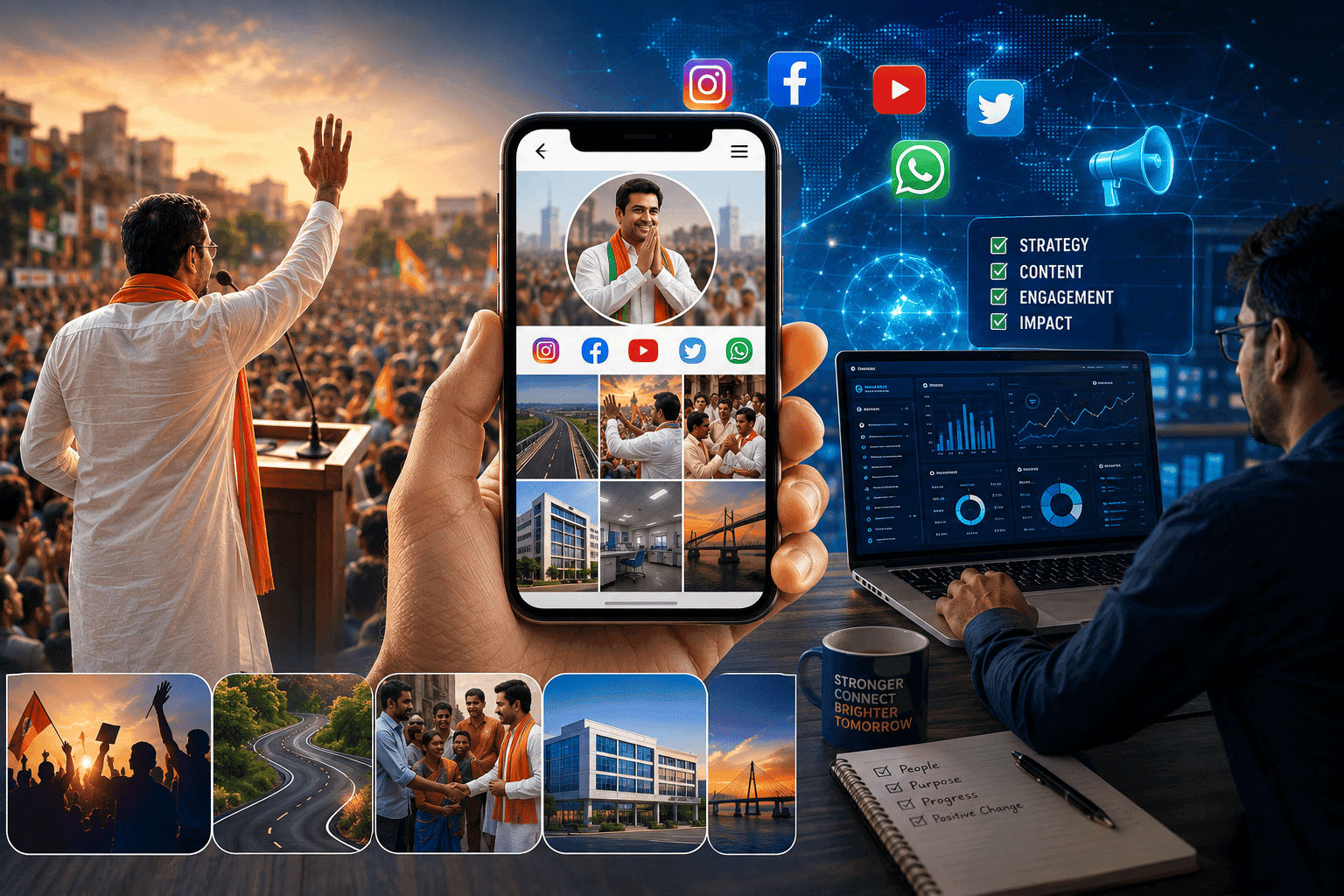
Modern politics is no longer fought only in rallies, newspaper headlines, or television debates. It is now fought on smartphones, social media platforms, messaging apps, YouTube channels, podcasts, and digital advertisements. Every swipe, click, and share has become part of the political battlefield. The question is no longer who has the largest crowd at a rally? It has become who dominates the digital conversation?
This dramatic shift has completely redefined election campaigns, voter engagement, political communication, and even public opinion. Understanding this evolution helps us understand why modern elections feel so different from those of previous generations.
Politics Before the Digital Revolution
For decades, election campaigns relied almost entirely on offline strategies. Political leaders traveled from village to village, city to city, meeting citizens face-to-face. Campaign workers distributed pamphlets, pasted posters on walls, organized public meetings, and went door-to-door asking for support. Newspapers carried political advertisements, while television and radio broadcasts reached households at scheduled times.
Winning an election depended heavily on physical presence. Candidates invested enormous time in building personal relationships with local communities. Public speeches, debates, and political rallies were among the most influential campaign tools. Every handshake mattered because voters often decided based on direct interactions or recommendations from family and community leaders.
Information also moved much slower. A political statement made in one city might take an entire day—or even several days—to reach voters in another region. Fact-checking was limited, but so was the speed at which misinformation could spread. Although traditional politics had its own flaws, campaigns generally revolved around physical outreach, grassroots organizing, and local engagement.
The Rise of Digital Politics
- The arrival of the internet completely changed political campaigning. Social media platforms transformed every smartphone into a mini newsroom, every citizen into a content creator, and every political supporter into a potential campaign volunteer.
- Today, political campaigns are carefully planned across platforms like Facebook, Instagram, Twitter, YouTube, WhatsApp, and other digital channels. Leaders communicate directly with citizens through live videos, podcasts, interviews, short-form content, and social media updates.
- Unlike traditional campaigns that depended on geography, digital campaigns operate 24 hours a day without borders. A speech delivered in Delhi, London, Washington, or Tokyo can be viewed worldwide within minutes.
- Modern election campaigns are now supported by digital marketing teams, social media strategists, content creators, graphic designers, video editors, data analysts, and artificial intelligence tools. Political communication has become faster, more targeted, and far more sophisticated than ever before.
Social Media Has Become the New Political Battlefield
One of the biggest changes in modern politics is the growing influence of social media. Political parties no longer compete only through rallies and public meetings—they compete for attention online. Every trending hashtag, viral reel, meme, podcast clip, or YouTube interview has the potential to shape public opinion. Political narratives can spread across millions of users in just a few hours.
Supporters actively create and share campaign content, while opponents respond with counterarguments just as quickly. Digital engagement has become a measure of political visibility, even though online popularity does not always translate into electoral success.
Many major political parties around the world—including the Bharatiya Janata Party (BJP), the Indian National Congress, the Democratic Party, the Republican Party, and others—invest heavily in digital communication because they recognize that modern voters spend a significant portion of their time online.
Data Is the New Campaign Currency
Perhaps the biggest difference between traditional politics and modern politics is the role of data. Earlier campaigns focused on entire constituencies. Today, campaigns often target specific voter groups based on demographics, interests, language, age, location, and online behaviour.
Digital advertising allows political organizations to deliver customized messages to different audiences. Young voters may see one campaign message, while senior citizens receive another. Urban voters might receive different advertisements than rural communities.
This personalized communication makes digital political campaigns highly effective but also raises important questions about transparency, privacy, and ethical campaigning.
The Challenge of Fake News and Misinformation
While digital politics offers greater accessibility, it also creates new challenges. False information, manipulated videos, misleading headlines, and edited images can spread rapidly across social media platforms. Sometimes misinformation travels much faster than verified facts, influencing public perception before corrections reach the same audience.
Political polarization often increases because algorithms tend to show users content similar to what they already believe. As a result, many people spend more time inside online "echo chambers," where opposing viewpoints receive less attention.
This is why digital literacy has become just as important as political awareness. Modern voters must evaluate information critically instead of accepting every viral post at face value.
Are Traditional Campaigns Still Relevant?
Despite the rise of digital campaigning, offline politics has not disappeared. Public rallies, roadshows, door-to-door campaigns, town hall meetings, and personal interactions continue to play a vital role in elections. In many regions, especially where internet access is limited, face-to-face communication remains one of the most trusted forms of political outreach.
Successful political campaigns today usually combine both approaches. Digital platforms help leaders reach millions instantly, while offline engagement builds personal trust and long-term relationships with voters. Rather than replacing traditional politics, digital campaigning has expanded the ways political parties communicate with citizens.
The Future of Political Campaigning
Technology is likely to play an even bigger role in future elections. Artificial intelligence, predictive analytics, virtual town halls, AI-generated content, multilingual chatbots, and immersive digital experiences are already beginning to influence political communication.
At the same time, governments, technology companies, journalists, and civil society face growing pressure to address issues such as misinformation, online harassment, election integrity, and transparency in political advertising. The challenge for democracies is finding the right balance between technological innovation and ethical political communication.
Final Thoughts
Elections are no longer fought only on roads, in public squares, or through newspaper headlines. They are also fought on timelines, search engines, messaging apps, livestreams, and digital platforms where millions of conversations happen every day.
The digital revolution has made politics faster, more interactive, and more accessible than ever before. It has empowered citizens to participate in public debates while also creating new risks related to misinformation and polarization.
For voters, the responsibility has grown alongside the technology. Whether political campaigns begin with a handshake in a neighbourhood or a post on social media, democracy ultimately depends on citizens who seek facts, think critically, and participate thoughtfully. Modern politics may have moved from streets to screens, but the power to shape the future still rests with the people.